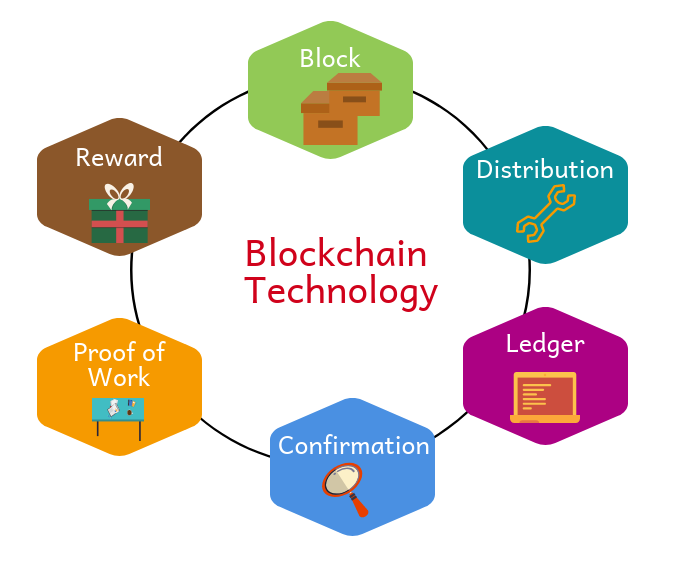
Blockchain technology has become popular due to its successful adoption for cryptocurrencies like Bitcoin. This distributed digital ledger has many advantages as it can keep the records of all data or money transaction made between any two parties in a secure, immutable, and transparent manner.
Last year, the concept of blockchain started to capture public attention. Experts predict blockchain technology will be implemented for various industries and expect that the future of blockchain is to revolutionize traditional business processes. However, the pros and cons of blockchain show that it’s not as easy to do as it seems.
Most Blockchain Startups Will Fail Last year, we saw an increase in funding for blockchain startups. However, like any new technology, blockchain is still immature in its implementation, so it can unmeet the expectations of investors. As a result, many blockchain startups are expected to be just a waste of time and money. False starts in blockchain deployment will lead organizations to failed innovations, rash decisions, and even complete refusal of this innovative technology.
Undoubtedly, blockchain technology in the future will affect every aspect of businesses, but this is a gradual process that requires time and patience. Gartner predicts that most traditional businesses will keep an eye on blockchain technology, but won’t plan any actions, waiting for more examples of the best applications of blockchain technology.
The reason for this is that traditional enterprises require more transformation for blockchain deployment than newly-appeared businesses. According to Gartner, only 10% of traditional companies will achieve any radical transformation with blockchain technologies by 2023.
Blockchain technology has disrupted several industries and is looking to shape the future of automation, robotics, machine learning and a lot of other fields. But it’s not all bliss and harmony in the world of block chains. It, like any other technology, has its limitations. Let’s take a look at a few blockchain disadvantages.
Blockchain is not a Distributed Computing System • Scalability Is An Issue • Some Blockchain Solutions Consume Too Much Energy •Blockchain Cannot Go Back — Data is Immutable •Blockchains are Sometimes Inefficient • Not Completely Secure.
Complexity Dealing with blockchain technology involves picking up an entirely new vocabulary.
It has made cryptography more mainstream, but the highly specialized industry is chock-full of jargon. Thankfully there are blockchain and cryptocurrency courses and indexes being created for newcomers, but overall this is a very complicated industry that will not be soaked in and applied overnight.
Network size Blockchains (like all distributed systems) are not so much resistant to bad actors as they are ‘anti-fragile’ – that is, they respond to attacks and grow stronger.
This requires a large network of users, however. If a blockchain is not a robust network with a widely distributed grid of nodes, it becomes more difficult to reap the full benefit.
There are some discussion and debate about whether this is a fatal flaw for some blockchain projects.
Transaction costs, network speed Bitcoin currently has notable transaction costs after being touted as ‘nearly free’ for the first few years of its existence.
As of late 2016, it can only process about seven transactions per second and each transaction costs about $0.20 and can only store 80 bytes of data. Most of this cost is covered by the energy consumption. There are very fewer chances that this issue can be resolved by the advancement in technology. As the other factor that is the storage problem might be covered by the energy issues cannot be resolved.
The advantages of blockchain technology, as well as its benefits, are many. Blockchain integration into many industries and companies has stirred a seismic shift in the way data is secured, and work is done in general. Through blockchain, key areas that bring organizational challenges are now being solved with ease.
The blockchain advantages any particular company or organization records may differ based on their business models, as well as the business processes they are notably overhauling. In this section, we will discuss some of the top advantages of blockchain technology, as applicable both in industries, and government agencies alike.
To be ahead of the competition you can learn blockchain at the iMi Academy.
1. Enhanced security
Blockchain technology brandishes superior technology in securing the entries or data stored in its digital ledger. Every blockchain platform employs a consensus model which guides the entry or registration of data on the ledgers. Data cannot just be appended onto the block at will, and as such, no one can manipulate or squeeze any entry in without the consensus. Once the data is filled into each block, they are enclosed with encryption, making accessibility possible only through a hashing method.
The decentralization model or nature of blockchain technology, in which each computer or node in the network owns a copy of the transactions recorded is also a basis for enhanced security. For any malicious actor to gain access, such an actor must gain access to at least 51% of the network, going by most blockchain networks, to be able to effect a major attack on blockchain applications. This is not feasible in a typical real-world scenario.
As the number of node operators increases, the security of the network is further enhanced.
2. Decentralization
Blockchain technology is an ideal example of a decentralized network system at work. The network or hardware resources that power the blockchain ecosystem is owned by every node operator who also shares the data that is generated to be stored in the system. Decentralization is one key way to bring trust in a digital ecosystem where trust is hard to come by.
The world has been plagued by the inefficiencies of a centralized model of running data systems in financial services, healthcare, and other key areas. Centralizing data points predisposes the system to a low fault tolerance as well as opening it up to a single point of failure. All of these are not inherent in a decentralized blockchain system.
There are many direct and unique advantages decentralization brings to an entity and this includes but not limited to reducing the points of weakness in the network, and resource distribution optimization. In reality, concentrating network maintenance and governance in a centralized server can lead to the exhaustion of resources and manpower, ultimately leading to inefficient and slow services. It is hard for all parties in a decentralized system to experience worn-out systems at the same time. Each individual node is managed independently and the possibility of uniform collapse is low.
3. Traceability
Another major benefit blockchain technology offers is the traceability of goods in a supply chain business. Blockchain can be used to build a supply chain system that will directly benefit producers or suppliers and vendors or product consumers. Blockchain traceability systems help to wade off the challenges prevalent in the traditional systems which involve the difficulty in fishing out counterfeit goods, pilfering, audit trail, and other such problems.
4. Transparency
Achieving transparency by many governments and organizations has been attempted in various ways over the years. Some places a system of trust in individuals, perhaps at the management level in an organization to oversee transactions. However, humans can be fraught with corruption, and this system has proven not to yield many results over time.
While Legal laws have also not helped, rules and regulations established in organizations have not also proven to work in maintaining transparent transactional processes. This leaves stakeholders to begin exploring emerging technologies for their merits. Here is where blockchain technology comes to life. Registering data or the record-keeping of transactions on open-source distributed ledgers, such as hyperledger, managed by peers brings transparency.
Peers may conduct the transactions and double as the validator of the transactions for storage on the blockchain. All of the inherent features of a decentralized network particularly the safekeeping of encrypted transactions on each node also contributes to the transparency of the entire system.
5. Speed and Efficiency
Over the past few decades, there has been a gradual evolution and transformation in digital workflows. From the manual recording of data before the advent of digital systems, the world experienced a remarkable shift towards automation. More than before, technological advances have always sought to replace the more time-consuming processes with more efficient systems, and Blockchain technology is the right candidate for this use case.
The automation of transactions helps remove human-based errors while the transaction confirmation speed in real-time by all participants in the network helps improve the overall efficiency of the system. Those that have carried out a transaction or two (such as cross-border funds transfer) using such blockchain solutions as found in digital currencies can attest to how fast it is in settling such transactions compared to what is on offer by financial institutions and fintech platforms.
As often reiterated, blockchain technology does not only find expression in digital assets or cryptocurrencies like Bitcoin, Ethereum, and other altcoins. Every system that utilizes blockchain equally benefits from its inherent speed and efficiency.
6. Reduced costs (no intermediaries)
The absence of intermediaries or middlemen helps to lower the cost of transactions in many business systems or financial transactions. To put it in the right perspective, the presence of middlemen in a particular transaction comes with paying for the services of such an actor. Blockchain technology lets consumers interact directly with one another, thus making the roles of intermediaries such as Google, Microsoft, or IBM very redundant.
Let’s use Central Banks to buttress the roles of intermediaries and how this new technology in the payment system has notably changed things. Central Banks prints and issues money to the various banking institutions operating the country’s banking regulatory provisions. These banks are tasked with the responsibility of distributing the fiat money to users and collects commissions and fees for the services they provide.
One of the benefits of blockchain technology is the growing use of cryptocurrencies for transactions. Now, anyone anywhere can transfer funds directly to family, friends, and business parties by paying almost a negligible fraction of the 5 to 7% transaction fee traditional financial institutions would have charged. This elimination of middlemen for tracking goods in a supply chain network also.
7. Immutability
The feature of immutability inherent in distributed ledger technologies of which blockchain is a subset is also a basis for trusted security. Once data is stored on the chain, it cannot be changed, corrected, or removed. This sieves out fraud or any attempt to manipulate stored records.
2. Energy and Utilities
Managing the broad ecosystem involving the production and distribution network associated with the energy sector can be very complicated, and costly for governments around the world. It is not uncommon to trail cash leakages to improperly managed oil distribution networks. Blockchain technology brings in the needed integrity check to ensure a smooth and efficient running of this sector.
Per the exact ways, production data generated in the energy and utility industry can be recorded on the blockchain in real-time. Other vital data such as inventory and delivery data can also be stored on the blockchain, making it impossible to be tracked, boosting the operational transparency of the sector.
The energy sector has been one of the hotbeds for hackers with several key private stakeholders targeted in the past. Much recently, a US oil company, Colonial Pipeline Co paid hackers the sum of $4.4 million when they laid siege to the company’s systems. This is one of the many cases suffered, and with blockchain technology, this trend can either be drastically reduced or averted completely. The decentralized, encrypted, and distributed feature of blockchain running across a network of computers makes it impregnable for hackers.
3. Real Estate
Based on the recent trends in the Real Estate industry, the industry has come off as a major beneficiary of blockchain innovations. Land and property scams are notably a nightmare to withstand. Real Estate managers can utilize blockchain technology to tokenize land and ownership data, making it possible to rent or lease an asset-based on predefined codes or conditions.
For the broader real estate outlets with lots of clients, blockchain technology can be used to create a digital identity and funding management, to streamline the role of middlemen in the real estate business. The distributed ledgers also make it easy for an easy and secure sharing of clients’ personal information.
Many real estate transactions involve contracts. Against the use of lawyers that charge high legal fees, real estate owners can easily switch to smart contracts build either on permissioned or public blockchains. The smart contracts automate the agreements and execute the details when certain conditions are met. The other benefits blockchain technology brings to the real estate niche include transparent fund management and accounting process as well as the overall security of data points.
4. Healthcare
Blockchain helps to preserve the health record of patients that are stored in blocks and encrypted accordingly. Through the secure sharing of patient data, better diagnosis can be done, better clinical trials can be carried out, and drug prescription can be significantly improved.
While blockchain keeps malicious actors away, it also grants the right control to data owners as they can control what data and who they get to share their health profiles with.
5. Government
Blockchain technology is a veritable tool to eliminate corruption in government agencies. By storing data and transactions on the blockchain, figure manipulation finds no place to thrive, and all actors are forced to conduct themselves in a manner that will be consistent with registered data, especially as it relates to financial records.
Government agencies and regulators can also utilize the blockchain to enhance the secure sharing of information with one another, a move that can boost efficiency, and remove operational bottlenecks. On the broader end, some governments around the world are also utilize distributed ledger technology to create central bank digital currencies, the virtual money that can serve as a digital form of fiat money.
These projects are beginning to gain the hype lately and maybe the next wave of innovation amongst the major economies in the next decade.
6. Supply Chain and Logistics
This is one of the most prominent sectors blockchain is helping to improve. The integration of blockchain helps improve goods traceability, inspires transparency in the business dealing with between manufacturers, suppliers, and retailers alike.
Blockchain technology also helps in achieving better freight tracking, boost the security of network systems used in the supply chain and logistics industry.
7. Manufacturing
Manufacturers all around the globe and especially the ones into appliances, machinery, sensors, and other kinds of devices, do use blockchain technology to connect these “things” with a network and the internet. This is exactly what the internet of things (IoT) is all about.
IoT is a system of interrelated computing devices. By using distributed ledger technology it’s easy to provide unique identifiers (UIDs) and transfer data in a secure and safe way from one device to any other.
OUR CONCLUSION
Blockchain technology is already gaining solid ground across various industries today. Drawing on its cryptography designs as well as other technical uniqueness, the nascent technology has heralded a defined way to revolutionize security. Additionally, it is helping to reduce the cost of transactions and enhance transparency amongst multi parties involved in running a business transaction or organization.
Blockchain technology is a technology for the now, with a way to help reshape the future of work. The benefits are more diverse and are always evolving per industry, per time.
To find out more on how you and your organization can benefit from blockchain technology then follow us on Linkedin or book an initial consultation right away.
Learn Blockchain!
Book a Blockchain Training Watch our Webinars Enroll in Blockchain Courses Become a Pro yourselfLearn About Blockchain
Get free Blockchain Tips!
Get monthly blockchain tips. On top, you’ll get our free blockchain beginners course right away to learn how this technology will change our lives. Accept GDPR Terms*GOSHARE OUR PASSION
Marcel is a Business Economist and founder of iMi Blockchain. A Consultant and international Keynote Speaker. He studied at the University of Oxford. He helps enterprises to implement Blockchain applications. On our blog, he writes about distributed ledger technology, smart contracts, cryptocurrencies, industry news, and future trends.
• Agriculture sector: • The blockchain technology enables the traceability of information in the food supply chain and thus helps improve food safety. It provides a secure way of storing and managing data, which facilitates the development and use of data-driven innovations for smart farming and smart index-based agriculture insurance. In addition, it can reduce transaction costs, which will benefit farmers’ access to markets and generating new revenue streams. Despite enormous potential advantages, key limitations remain for applying the blockchain technology in agriculture and foodsector.
Healthcare sector: Blockchains in healthcare can be envisaged in five primary areas: • Managing electronic medical record (EMR) data • Protection of healthcare data • Personal health record data management • Point-of-care genomics management • Electronics health records data management
Banking sector: • ICICI Bank, Axis Bank and Yes Bank, which have been at the forefront of blockchain efforts in the country, have joined JP Morgan’s blockchain platform, ‘the Interbank Information Network (IIN)’ in September 2019, which enables faster cross-border payments by providing secure exchange information to banks at lower cost.
Mining sector A peer-to-peer computer process, Blockchain mining is used to secure and verify bitcoin transactions. Mining involves Blockchain miners who add bitcoin transaction data to Bitcoin’s global public ledger of past transactions. … In the same manner, a lot of computing power is consumed in the process of mining bitcoins.
Finance sector: •With blockchain, the financial industry is improving security, lowering risk and saving costs by bringing visibility and lowering friction along the long list of transactions that accompany most financial interactions, according to financial industry authorities and blockchain experts.
Education sector: • Helps in the Verification of Student Records and Accreditation. Blockchain technology transforms record-keeping of certificates and student credentials in learning institutions. There is no need for an intermediary in verifying degrees, certificates, diplomas, and other academic papers with blockchain technology.
Blockchain and the food industry This includes the secure handling and storing of administrative records and digital authentication to strengthen intellectual property rights and patent systems, as well as bring transparency throughout the supply chain, reduce food frauds and enhance food safety.
In 2019, it was estimated that around $2.9 billion were invested in block chain technology, which represents an 89% increase from the year prior. Additionally, the International Data Corp has estimated that corporate investment into block chain technology will reach $12.4 billion by 2022. Furthermore, According to PricewaterhouseCoopers (PwC), the second-largest professional services network in the world, block chain technology has the potential to generate an annual business value of more than $3 trillion by 2030. PwC’s estimate is further augmented by a 2018 study that they have conducted, in which PwC surveyed 600 business executives and determined that 84% have at least some exposure to utilizing block chain technology, which indicts a significant demand and interest in block chain technology. Individual use of block chain technology has also greatly increased since 2016. According to statistics in 2020, there were more than 40 million block chain wallets in 2020 in comparison to around 10 million block chain wallets in 2016. Cryptocurrencies. Most cryptocurrencies use block chain technology to record transactions. For example, the bitcoin network and Ethereum network are both based on block chain. On 8 May 2018 Facebook confirmed that it would open a new blockchain group. which would be headed by David Marcus, who previously was in charge of Messenger. Facebook’s planned cryptocurrency platform, Libra (now known as Diem), was formally announced on June 18, 2019. Governments have mixed policies on the legality of their citizens or banks owning cryptocurrencies. China implements blockchain technology in several industries including a national digital currency which launched in 2020. In order to strengthen their respective currencies, Western governments including the European Union and the United States have initiated similar projects.
SMART CONTRACTS USE CASES Smart contracts are like regular contracts except the rules of the contract are enforced in real-time on a blockchain, which eliminates the middleman and adds levels of accountability for all partielo involved in a way not possible with traditional agreements. This saves businesses time and money, while also ensuring compliance from everyone involved. Blockchain-based contracts are becoming more and more popular as sectors like government, healthcare and the real estate industry discover the benefits. a few examples of how companies are using blockchain to make contracts smarter. View All Jobs
BURSTIQ
How it’s using blockchain: BurstIQ’s big data blockchain contracts help patients and doctors securely transfer sensitive medical information. The smart contracts establish the parameters of what data can be shared and even displays details of personalized health plans for each patient.
MEDIACHAIN
How it’s using blockchain: Mediachain uses smart contracts to get musicians the money they deserve. By entering into a decentralized, transparent contract, artists can agree to higher royalties and actually get paid in full and on time. Streaming giant Spotify acquired Mediachain in April 2017.
PROPY
How it’s using blockchain: Propy is a global real estate marketplace with a decentralized title registry system. The online marketplace uses blockchain to make title issuance instantaneous and even offers properties that can be purchased using cryptocurrency.
MONEY TRANSFER USE CASES
Pioneered by Bitcoin, cryptocurrency transfer apps are exploding in popularity right now. Blockchain is especially popular in finance for the money and time it can save financial companies of all sizes. By eliminating bureaucratic red tape, making ledger systems real-time and reducing third-party fees, blockchain can save the largest banks $8-$12 billion a year, according to a recent article by ComputerWorld. We’ll take a deeper dive into four companies using blockchain to efficiently transfer money.
OPSKINS
How it’s using blockchain: Gamers looking to buy rare skins, accessories and even emotes can use Bitcoin as a method of payment at the OPSkins online marketplace. Sellers receive the bitcoin in their virtual wallet and either choose to keep the cryptocurrency or exchange it for cash. OPSkins processes more than two million virtual transactions a week.
CIRCLE
How it’s using blockchain: Boston-based Circle oversees more than $2 billion a month in cryptocurrency investments and exchanges between friends. Circle’s investment and money transfer platform currently features seven different cryptocurrencies, including Bitcoin, Monero and Zcash.
CHAIN
How it’s using blockchain: Chain builds cloud blockchain infrastructures for financial services. The San Francisco company’s cryptographic ledgers help financial institutions safely and efficiently handle the transfer of cryptocurrencies.
INTERNET OF THINGS USE CASES The Internet of Things (IoT) is the next logical boom in blockchain applications. IoT has millions of applications and many safety concerns, and an increase in IoT products means better chances for hackers to steal your data on everything from an Amazon Alexa to a smart thermostat. Blockchain-infused IoT adds a higher level of security to prevent data breaches by utilizing transparency and virtual incorruptibility of the technology to keep things “smart.” Below are a few US companies using blockchain to make the Internet of Things safer and smarter.
How it’s using blockchain: Filament creates software and microchip hardware that lets connected devices operate on blockchain.
HEALTH CARE
Blockchain in healthcare, though early in its adoption, is already showing some promise. In fact, early blockchain solutions have shown the potential to reduce healthcare costs, improve access to information across stakeholders and streamline businesses processes. An advanced system for collecting and sharing private information could be just what the doctor ordered to make sure that an already bloated sector can trim down exorbitant costs.
GOVERNMENT USE CASES
One of the most surprising applications for blockchain can be in the form of improving government. As mentioned previously, some state governments like Illinois are already using the technology to secure government documents, but blockchain can also improve bureaucratic efficiency, accountability and reduce massive financial burdens. Blockchain has the potential to cut through millions of hours of red tape every year, hold public officials accountable through smart contracts and provide transparency by recording a public record of all activity, according to the New York Times
Voting process
How it’s using blockchain: Follow My Vote is a secure online voting platform using an open-source virtual blockchain ballot box. The technology decreases spending on physical ballots and can be accessed via any device. Follow My Vote implements the end-to-end tools that elections need in order to provide total safety and confidence in the voting process.
Bitcoin, Ethereal and Litecoin transactions per day January 2011 – January 2021 Cryptographer David Chaum first proposed a block chain-like protocol in his 1982 dissertation “Computer Systems Established, Maintained, and Trusted by Mutually Suspicious Groups.” Further work on a cryptographically secured chain of blocks was described in 1991 by Stuart Haber and W. Scott Stornetta. They wanted to implement a system where document timestamps could not be tampered with. In 1992, Haber, Stornetta, and Dave Bayer incorporated Markel trees to the design, which improved its efficiency by allowing several document certificates to be collected into one block. The first block chain was conceptualized by a person (or group of people) known as Satoshi Nakamoto in 2008. Nakamoto improved the design in an important way using a Hashcash-like method to timestamp blocks without requiring them to be signed by a trusted party and introducing a difficulty parameter to stabilize rate with which blocks are added to the chain. The design was implemented the following year by Nakamoto as a core component of the cryptocurrency bitcoin, where it serves as the public ledger for all transactions on the network. In August 2014, the bitcoin blockchain file size, containing records of all transactions that have occurred on the network, reached 20 GB (gigabytes). In January 2015, the size had grown to almost 30 GB, and from January 2016 to January 2017, the bitcoin blockchain grew from 50 GB to 100 GB in size. The ledger size had exceeded 200 GiB by early 2020. The words block and chain were used separately in Satoshi Nakamoto’s original paper, but were eventually popularized as a single word, blockchain, by 2016. According to Accenture, an application of the diffusion theory suggests that blockchains attained a 13.5% adoption rate within financial services in 2016, therefore reaching the early adopters phase. Industry trade groups joined to create the Global Blockchain Forum in 2016, an initiative of the Chamber of Digital Commerce. In May 2018, Gartner found that only 1% of CIOs indicated any kind of blockchain adoption within their organisations, and only 8% of CIOs were in the short-term “planning or [looking at] active experimentation with blockchain”. For the year 2019 Gartner reported 5% of CIOs believed blockchain technology was a ‘game-changer’ for their business.
Blockchain technology has the potential to substantially change the range of financial services. Colin Ellis said that banks could benefit significantly from the development and implementation of Blockchain technologies in terms of cost saving, risk reduction in enhanced efficiency. Blockchain technology is still an emerging technology and is increasing its popularity very fast. Blockchain technology was the primitive form for the hash tree and is also called as Merkle tree. It was patented by Ralph Merkle in 1979 and was functioned by verifying and handling the data b/w computer systems.
Blockchain Technology
In simple terms, Blockchain technology is the public distributed ledger of all the transactions that have ever been executed. It is an incorruptible digital ledger of the economic transaction swhich can be programmed to record not only financial transaction but also virtually everything for value. It offers the way for un-trusted parties to consensus (reach agreement) on a common digital history. It also solves the problems without using a trusted intermediary.
To ensure the security of digital relationships, every Blockchain technology is comprised of three underlying technologies that are combined as:
Cryptographic keys
Distributed network (with a shared ledger)
Network servicing protocol
Types of Blockchain technology
When we talk about the classification of Blockchain technology, there come two types of Blockchain and they are most generally differentiated as follows:
Permission Blockchain
This is the type of technology which includes Bitcoin, Ethereum and so on. The most specific and interesting about permission Blockchain is that users have a copy of the Blockchain and can participate in the transaction verification process of their own volition. In this technology, users can also keep their anonymity.
Types of Blockchain Technology
Permission less Blockchain
This is the type of technology with a prominent example of being the digital currency Ripple. In this technology, in order to have a copy of Blockchain and to participate in the process of transaction verification process, the users have to obtain the permission. Additionally, with such type of Blockchain technology, users cannot keep their anonymity.